Device saves use versioned browser storage and do not include health or account data.
Calories628
Protein52.9g
Carbs60.7g
Fat20.1g
Fiber8.5g
Per serving
Vitamins & minerals
Estimated · 100% data coverage
Vitamin A
60.96 mcg RAE6.8% DV100% coverage
Vitamin C
37.16 mg41.3% DV100% coverage
Vitamin D
0 mcg0% DV100% coverage
Vitamin B6
2.27 mg133.5% DV100% coverage
Vitamin B12
0.42 mcg17.5% DV100% coverage
Folate
104.19 mcg DFE26% DV100% coverage
Calcium
115.55 mg8.9% DV100% coverage
Iron
4.32 mg24% DV100% coverage
Magnesium
155.5 mg37% DV100% coverage
Potassium
2,140.41 mg45.5% DV100% coverage
Phosphorus
651.51 mg52.1% DV100% coverage
Zinc
2.86 mg26% DV100% coverage
% Daily Value uses US FDA Daily Values (2024). Coverage is the share of recipe ingredient weight represented by matched nutrient data.
Cook mode
Ingredients
Method
Useful swaps
Use tofu instead of chicken: Heat the oven to 425°F and whisk 20 g Dijon mustard, 15 g maple syrup, 3 g grated garlic, 0.6 g black pepper, and 9 g olive oil for 45 seconds. Toss 250 g dry potato quarters with 4.5 g olive oil and 0.5 g salt; arrange cut-side down and roast for 10 minutes. Coat 250 g pressed tofu cubes with half the maple-Dijon glaze, turn the potatoes, add the tofu and 120 g green beans, brush the remaining glaze over the beans and potatoes, and roast for 18 minutes until the tofu is browned, the potatoes are tender, and everything is steaming; rest for 2 minutes. Makes the tray bake vegan when the mustard and tofu are labeled suitable for a vegan diet. Removes poultry and introduces soy from tofu; mustard remains present. Tofu lowers protein and calories while keeping the glaze and crisp-edged texture.
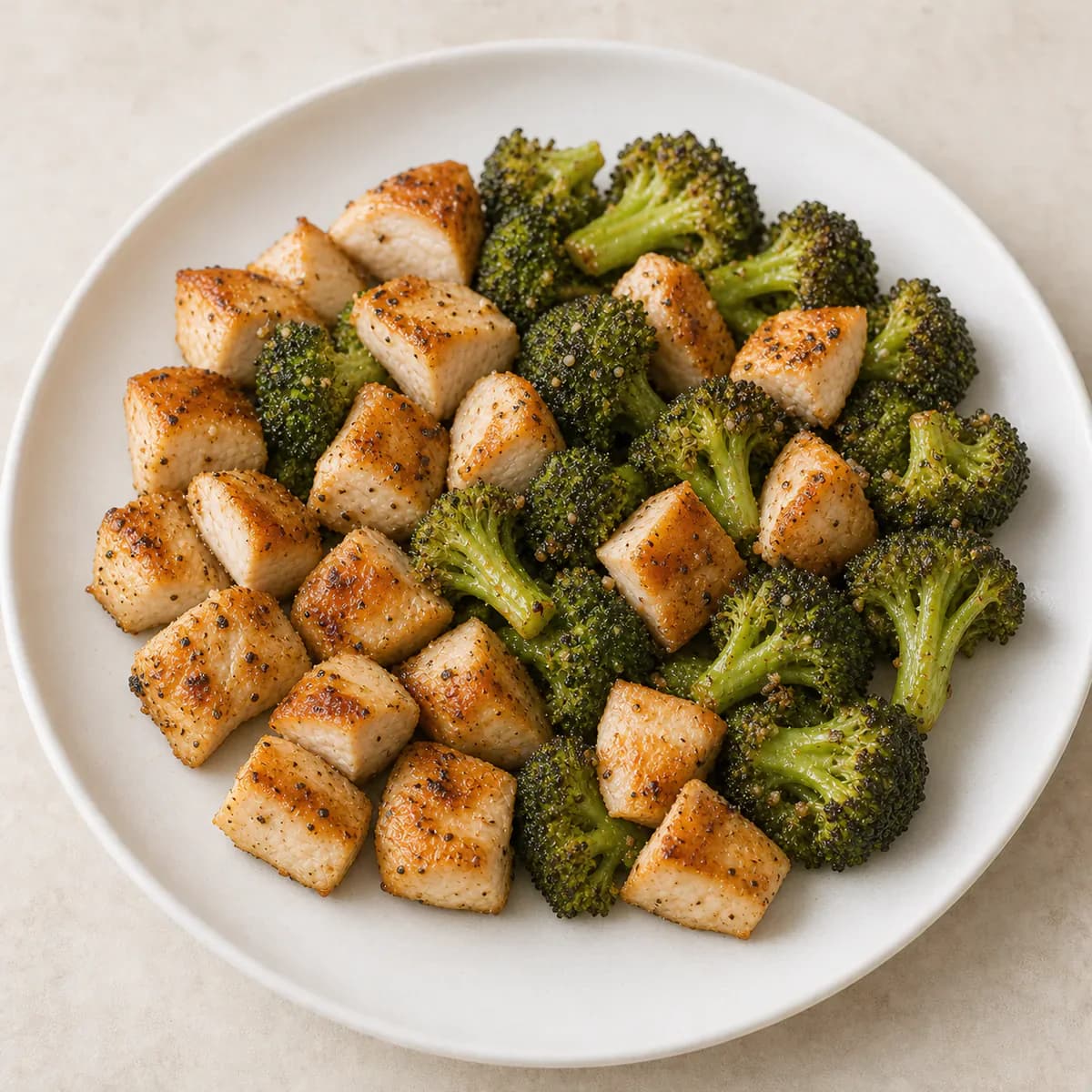
Use broccoli instead of green beans: Heat the oven to 425°F and whisk 20 g Dijon mustard, 15 g maple syrup, 3 g grated garlic, 0.6 g black pepper, and 9 g olive oil for 45 seconds. Toss 250 g dry potato quarters with 4.5 g olive oil and 0.5 g salt; arrange cut-side down and roast for 10 minutes. Coat 200 g chicken pieces with half the maple-Dijon glaze, turn the potatoes, add the chicken and 120 g broccoli florets, brush the remaining glaze over the vegetables, and roast for 16 to 18 minutes until every chicken piece reaches 165°F, the potatoes are tender, and the broccoli is browned; rest for 2 minutes. Remains a balanced chicken dinner. Mustard remains present; broccoli does not add a major regulated allergen. Broccoli keeps calories and protein close while adding a softer floret texture and more fiber.
Storage and reheating
Refrigerate for up to 3 days.
Not marked as freezer-friendly.
Suggested reheating: Oven, Microwave.
About this recipe data
The recipe, ingredients, method, image, and nutrition estimates on this page are synchronized from the same published Raso catalog used by the app.
Nutrition is a planning estimate, not laboratory analysis or medical advice. Brands, exact weights, substitutions, and cooking loss can change the result.
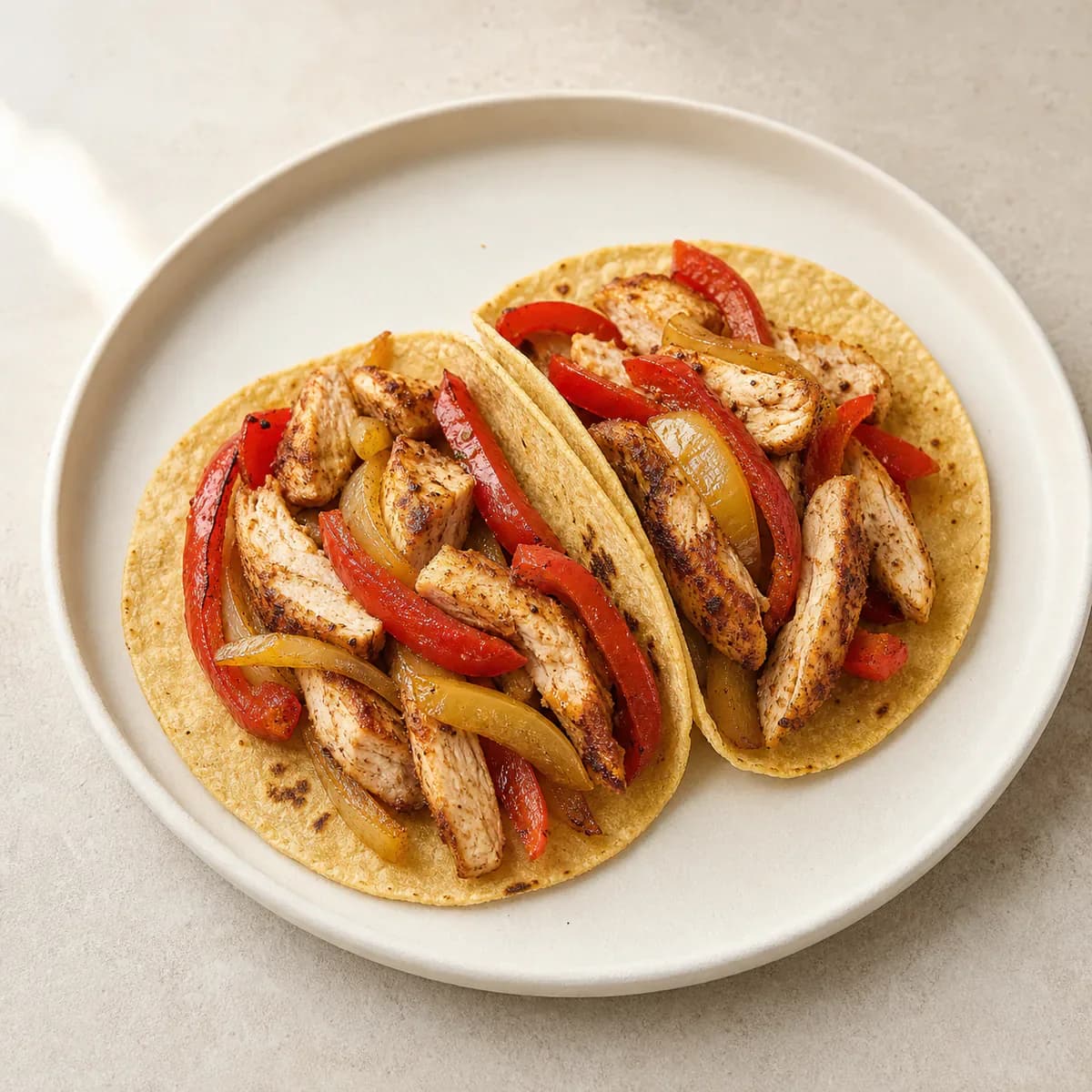
Chicken, red pepper, onion, corn tortillas, and cumin make a true five-main-ingredient fajita dinner, with the vegetables and meat air-fried in one loose layer.
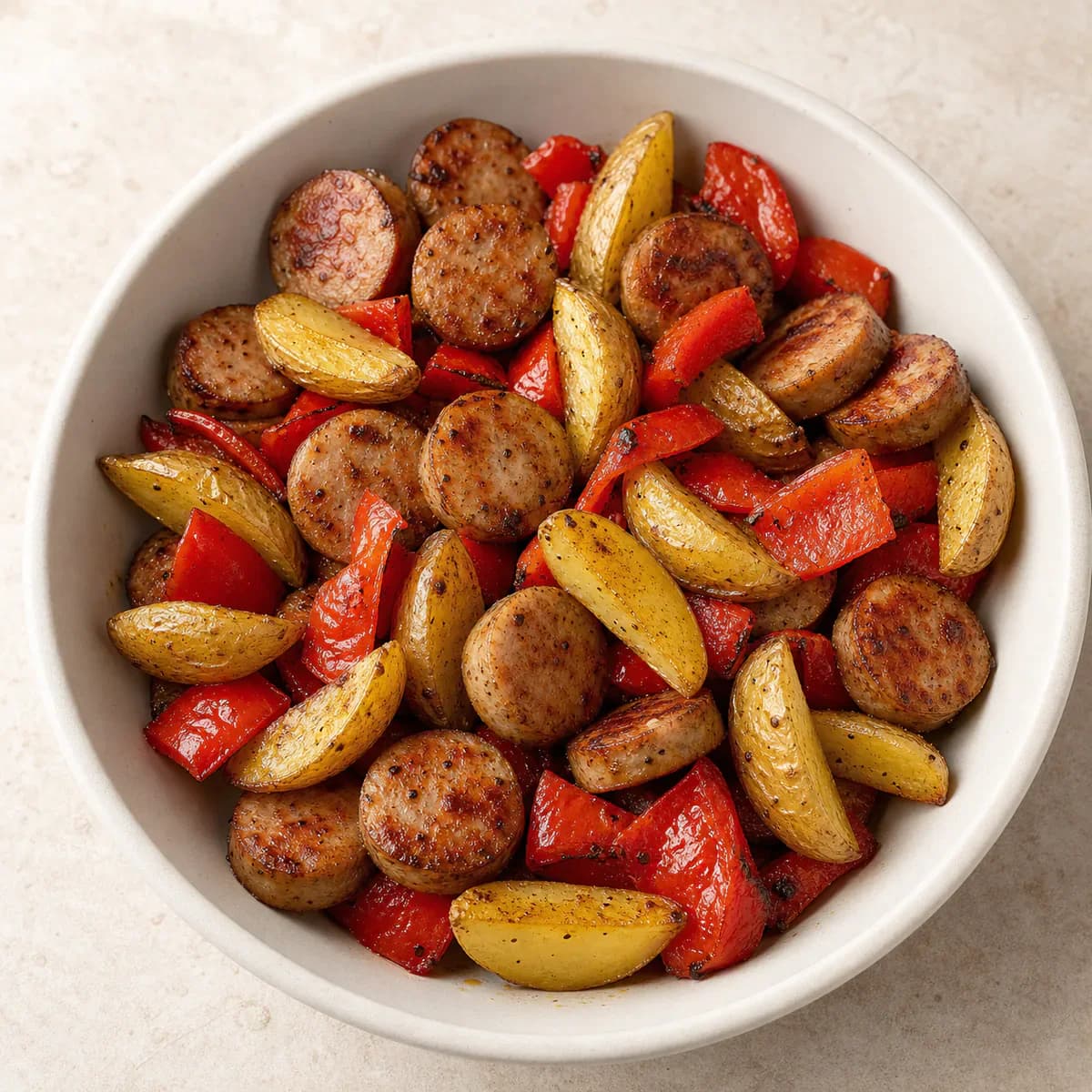
Baby potatoes get a head start before fully cooked chicken sausage and red pepper join the basket, keeping all three main ingredients properly browned in twenty minutes.